Systems Designed for Building Protection
Commercial Roofing in Midland for businesses managing flat roofs, low-slope systems, and large-scale roofing projects with specific performance requirements
Commercial buildings in West Texas face sustained UV exposure, thermal cycling that expands and contracts roofing membranes daily, and storm events that test drainage capacity and membrane attachment. Freedom Roofing LLC provides commercial roofing solutions throughout Midland for property owners who need installation, replacement, or repair work on systems fundamentally different from residential roofing. Commercial projects involve larger surface areas, different material systems such as TPO membranes and metal panels, and installation methods that account for equipment loads, rooftop access, and drainage design. The owner-operated company brings 38 years of roofing experience to every commercial project, ensuring that decisions about materials, installation sequencing, and building protection are made by someone who has worked through similar projects across the region.
Commercial roofing systems must manage water across flat or low-slope surfaces where gravity provides minimal drainage assistance, withstand foot traffic from HVAC maintenance crews, and accommodate rooftop equipment that penetrates the roofing membrane. The work includes evaluating the existing roof deck and insulation, selecting membrane or panel systems compatible with the building's structural capacity and use, and installing a complete assembly that includes insulation layers, the primary waterproofing membrane, and properly detailed penetrations and transitions. TPO roofing, metal roofing, and specialty roofing systems are selected based on the building's design, budget parameters, and long-term maintenance plans.
Request a site evaluation to assess your commercial roof's condition and discuss system options for your building type.
Commercial roofing installation begins with protecting the building's interior and any inventory or equipment from exposure during the tear-off and replacement process. Contractors section the roof into manageable work areas, removing old roofing materials in phases to minimize the time any part of the building is open to weather. New insulation is installed over the roof deck to meet current energy code requirements, followed by the primary roofing membrane or metal panel system, which is mechanically fastened or chemically adhered based on wind load calculations and manufacturer specifications.
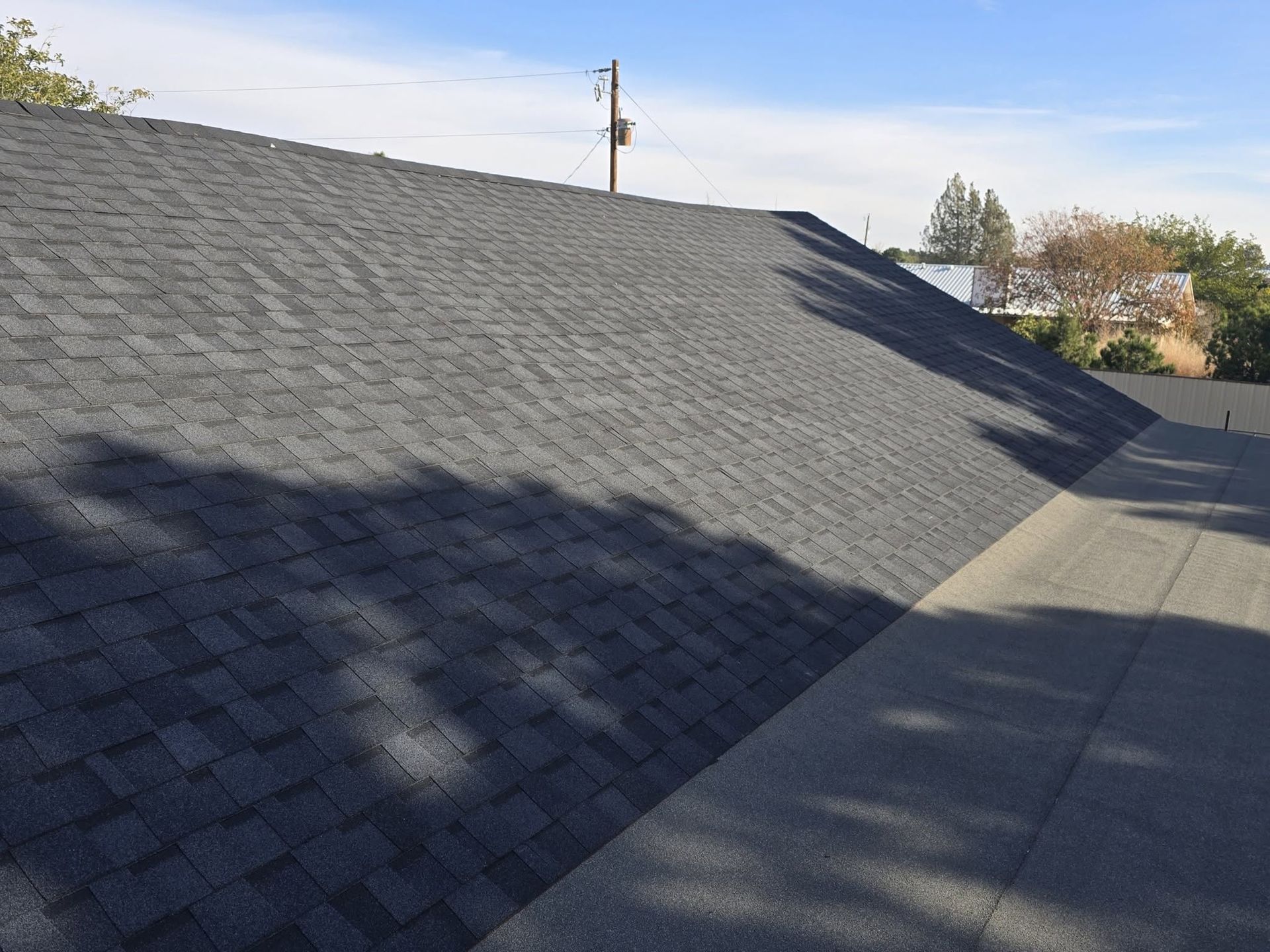
When the commercial roofing project is finished, you will observe a roof surface with no standing water after rain events, indicating that drainage slopes and scuppers are functioning correctly. Seams in single-ply membranes are heat-welded into continuous waterproof barriers, and all penetrations such as HVAC curbs, vent pipes, and parapet walls are flashed and sealed to prevent water intrusion. The building's interior remains dry during subsequent storms, and you no longer see water stains spreading across ceilings or pooling on floors after heavy rain.
Commercial roofing projects also include coordinating with building occupants to minimize disruption, scheduling work during off-hours when necessary, and maintaining site safety protocols for a working business environment. The project scope should clarify whether insulation replacement is included, how existing rooftop equipment will be handled, and what warranty or maintenance documentation will be provided after installation.
Common Questions About This Service
Commercial property owners frequently ask specific questions about roofing systems, project logistics, and long-term building protection.
What makes commercial roofing different from residential roofing?
Commercial roofs are typically flat or low-slope, use membrane or metal panel systems instead of shingles, and must accommodate rooftop equipment, drainage systems, and foot traffic. The installation process involves different material handling, sequencing, and safety requirements due to the building's size and ongoing business operations.
How do I know whether to repair or replace my commercial roof?
When you observe multiple leak locations, widespread membrane cracking or splitting, saturated insulation that no longer provides thermal resistance, or repeated repairs that fail within months, the roofing system has deteriorated beyond the point where additional patching provides cost-effective protection.
What roofing system is best for my commercial building?
The appropriate system depends on your roof's slope, structural load capacity, budget, and how the building is used. TPO membranes work well for many flat commercial roofs, metal panel systems suit buildings with adequate slope and structural support, and specialty systems address unique architectural or performance requirements that standard materials cannot meet.
How long does a commercial roofing project take?
Project duration varies widely based on building size, roof complexity, weather conditions, and the material system being installed. A small commercial building may be completed in several days, while larger facilities with multiple roof levels and extensive equipment can require weeks of phased work.
Why does direct owner involvement matter for commercial projects?
Commercial roofing projects involve coordination with building occupants, decisions about material substitutions or unexpected structural issues, and quality control across multiple work phases. When the business owner oversees these elements directly, you communicate with someone who understands both the technical roofing work and the business implications of delays, access restrictions, and budget adjustments.
Freedom Roofing LLC offers free estimates for commercial roofing projects throughout Midland and West Texas. Describe your building's roofing needs, schedule a roof inspection, and receive a project proposal that addresses your property's specific requirements and operating constraints.